
4 October 2021
Trying Typically Children's Hobbies as an Adult
The hobbies and interests of children, especially young girls, shouldn't be dismissed for being children's hobbies.
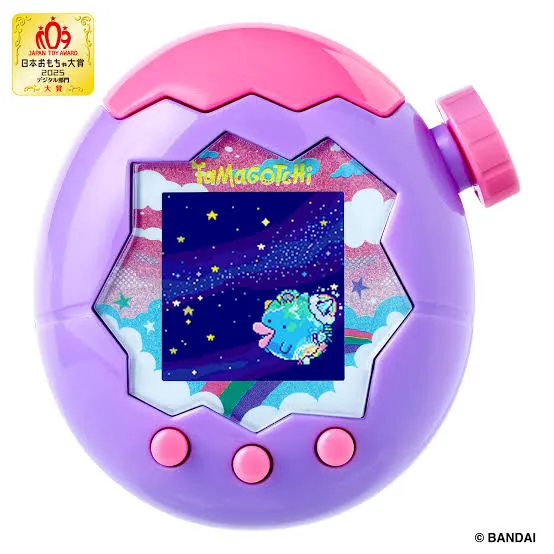
Throughout my life I have tried many hobbies, ranging from photography, to programming, to painting and many others. I have always loved learning about new things and even though I didn't always stick with some of the hobbies that I tried it was still fulfilling and allowed me to have conversations with people about their interests that I wouldn't have been able to have otherwise.
One of the interesting, and sometimes saddening, things I ran into was hobbies that don't inherently have anything wrong with them that are looked down upon. The typical examples of this includes anything relating to nerd culture such as video games, board games, being interesting in technology and sci-fi or comic book worlds. Interestingly things have flipped where superheroes and the like have become mainstream and the zeitgeist. While that change is interesting it has been covered many many times before and there is nothing I could add to the conversation.
The two main examples are hobbies that younger children, around 3 to 13 years old, and teenage girls enjoy being looked down upon for no real reason. I have a simple checklist I use to decide whether something is worthwhile. The first is, is there a positive aspect. Is the thing I am partaking in fun, do I learn something or anything along those lines. The second is does in negatively impact anyone else. This is fairly self-explanatory. For example, I don't like the idea of vandalism or drag racing because you could potentially harm people that have done nothing to deserve it. The third is does it harm me. You would think this contradicts the first point but not really. An example of this would be coffee. There has been research suggesting that coffee could impact your health in the long-term but for me the possible impacts are low enough and my enjoyment of coffee is great enough that I don't think it is a problem. Most things are neither purely good or purely bad which then requires critical evaluation of whether the downsides outweigh the upsides. Some people decide cocaine is worth it for example but I wouldn't even try it. Neither choice is necessarily wrong as people are at liberty to choose how they want to live. A fore-warning regarding this checklist if you decide to employ it; it is not the end-all-be-all. It doesn't fit every scenario because sometimes you have to do things you don't want to. It just helps with more simple things such as deciding on whether a hobby is worthwhile or not.
Reflecting on this very simple way of thinking and the hobbies of young kids and teenage girls shouldn't immediately set off any alarm bells. Playing Fortnite, the collection of action figures, building with Lego or other such kids' hobbies or the writing of fanfiction, creating Tumblrs pretending to be a character from your favourite show or trying to dress up in a really "girly" manner or similar hobbies for teenage girls aren't inherently bad and don't have any outwardly negative components. They might not be the most appealing or interesting of hobbies and to some they might even be cringe inducing but you wouldn't think so based on the levels of criticism thrown at them.
In regards to why teenage girls are viewed the way they are I am neither informed or qualified enough, as a 20 year old guy, to be able to properly discuss why that specific group is seen as negatively as they are but I felt it important to bring up as a point of interest and to cause some questioning in regards to why people react to their media the way they do.
With kids I believe there are quite a few reasons but as far as I can tell the biggest reason is due to othering. Kids at those ages are very different from most other age groups. A zoomer can look at a boomer and think they're stupid but there is still some degree of commonality. With kids they come across as very different. They tend to be very emotional, very energetic and have no filters. While there are adults like this, some of whom become leaders of countries, the majority of older people are not like that. Even if they do display those traits because of cultural expectations and practical considerations, such as teamwork, such traits are suppressed. Due to kids being kids it can make it very hard to approach the topics that they enjoy or kids themselves. Due to this they become somewhat akin to an alien species that, unless you are a parent, you are unlikely to interact with them. Even for parents it can be difficult; there is a reason there is the stereotype of out-of-touch parents trying to understand the interests their kids have and getting it woefully wrong.
One of the other reasons why I brought up teenage girls is because I believe they do not act the same as younger kids or fit the same mould. Usually around the age of 13/14 people develop a beautiful thing, called self-awareness. Unfortunately there has been a second pandemic that has not been spoken about which is the lack of self-awareness but that's a story for another day. Due to teenage girls generally being self-aware, not sure how to act and the expectations places upon them they tend to be more reserved and awkward due to trying to navigate difficult social landscapes. While they do still create cringe worthy and awkward content it is not especially different when compared to the interests of teenage boys. This is why I believe their interests being looked down upon, especially when compared to boys of the same age, is something to be pondered upon and looked into further.
Due to the difficulty that arises with connecting to children, their hobbies and interests tend to fall under the radar and if they are known they tend to be associated with the children themselves. This causes the interests of children to be shoe-boxed as being for kids. This is quite unfortunate as it means many people miss out on something they could really enjoy just because of preconceived notions. A perfect example of this is the resurgence of Minecraft. I grew up playing Minecraft, I was the epitome of the squeaky-voiced kid on servers getting overly invested and emotional, and due to me and others like me, Minecraft garnered the ire of many older people on the internet. People would talk about how cringe-worthy Minecraft was and put it down constantly but the moment us annoying kids grew up and became far easier to relate to Minecraft surged in popularity and now people love it. Minecraft itself didn't fundamentally change. It was and is the same game with the same basic principles. The developers of Minecraft expanded it and added onto what Minecraft was but they didn't do anything significant enough to warrant the complete shift in cultural perception that occurred.
Despite a prime example of a hobby being fun despite it's audience people will still actively dismiss anything relating to children. A current example is Fortnite. It isn't inherently a bad game, it is quite fun and despite having a somewhat toxic community that isn't rare in gaming especially when considering games such as League of Legends or DotA 2. It does have a highly predatory business model that takes advantage of children, their psychology and their lack of critical thinking but that is almost never a talking point of the people putting Fortnite down. The main reason tends to be, "it is a game kids play. I don't relate to kids and therefore it is bad." This is silly for fairly obvious reasons.
While my examples here relate to something silly such as whether people like or dislike Fortnite this does have further ramifications. It makes one wonder how kids are perceived when there is something serious impacting them. Some more common examples of this include things like abuse or bullying but what if a young girl were to speak up about climate change. Then are we going to ignore her simply because she is young or will we realise that children are people too and they are not stupid.
In the future when dealing with groups or the interests of groups which you don't relate to or understand maybe try to spend 15 minutes in their shoes and research what it is that they enjoy. It will make the world a far more empathetical place and that benefits everyone.